
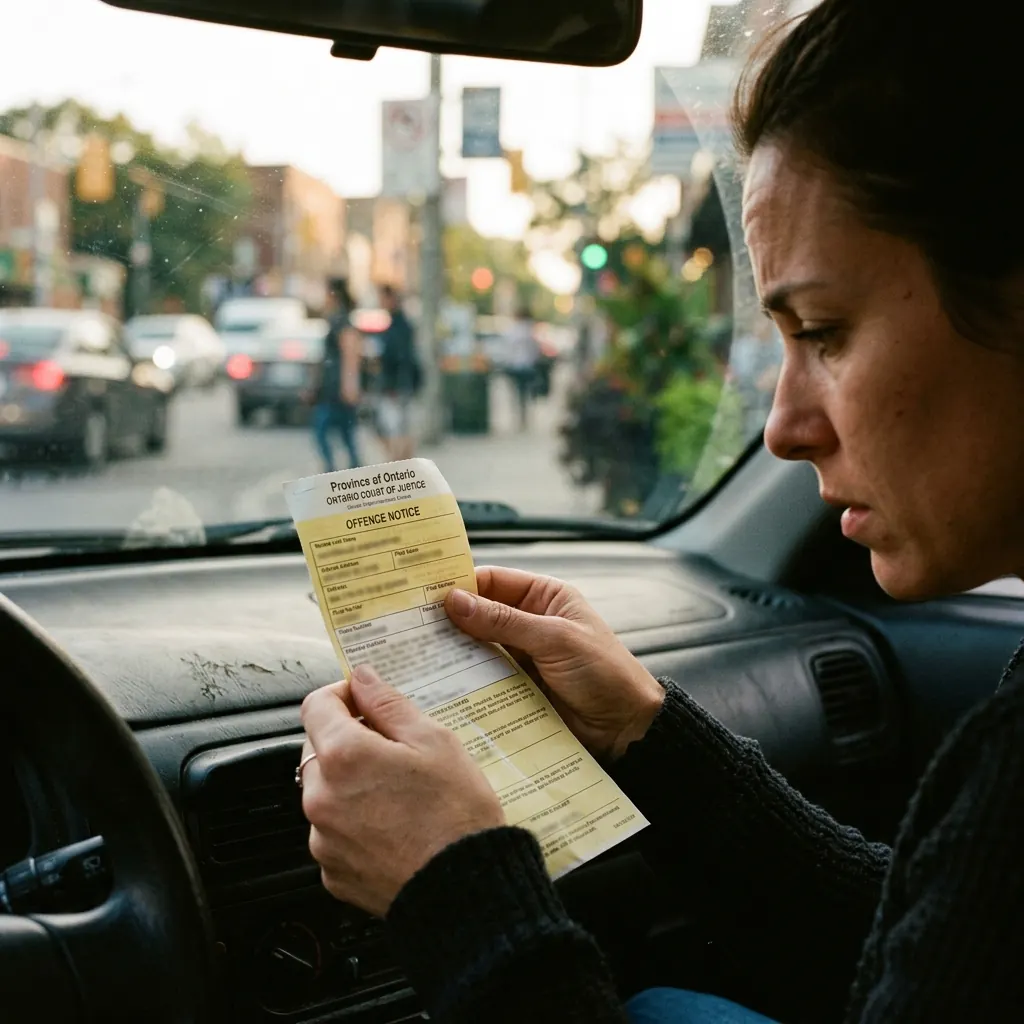
This charge is often laid after minor collisions, even when fault is genuinely disputed. Here is how it works and why it's worth challenging.
A broad, subjective charge
Section 142(1) of the HTA prohibits turning, changing lanes, or moving a vehicle from a stopped position unless it can be done safely. Because 'safely' is not precisely defined, officers commonly lay this charge as the default after a minor collision — regardless of who was actually at fault.
The penalty is modest, but the timing matters
On its own, a turn not in safety conviction carries 2 demerit points and a $110 set fine — relatively minor. The real risk is when it's paired with an at-fault collision on your insurance file, where the combination can push your premium up by significantly more than the ticket alone suggests.
How we approach it
Because fault is subjective by nature, these matters often turn on witness statements, damage patterns, and whether the other driver had time to react. We review the full collision report before recommending whether to contest the charge or negotiate a resolution that protects your insurance record.