
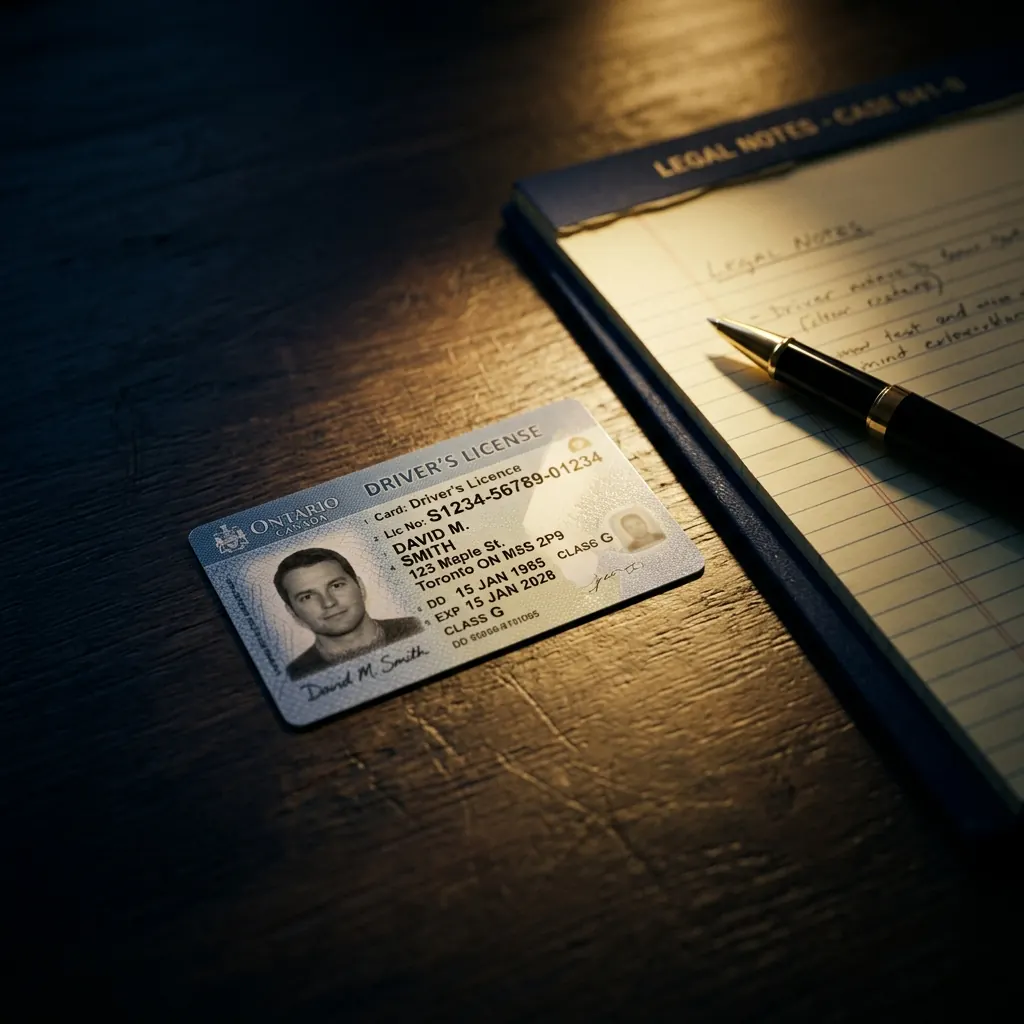
Ontario's demerit point list by offence: 7 for failing to remain, 6 for careless driving, 3 for a stop sign. Plus when points trigger a suspension.
Demerit points are licence penalties, not insurance points
Ontario adds demerit points after certain driving convictions. Points can trigger warning letters, interviews, suspensions, and stricter consequences for novice drivers.
Insurance companies do not price policies only by demerit points. They usually care about the conviction itself, the offence type, and your overall record.
Ontario demerit points chart by offence
The exact point value depends on the specific offence you're convicted of under the Highway Traffic Act, not on the fine amount. Here's the official breakdown for the offences drivers ask about most.
| Offence | Demerit points |
|---|---|
| Failing to remain at the scene of a collision | 7 |
| Failing to stop for police | 7 |
| Careless driving | 6 |
| Racing / stunt driving | 6 |
| Failing to stop for a school bus | 6 |
| Speeding 50 km/h or more over the limit | 6 |
| Following too closely (tailgating) | 4 |
| Speeding 30–49 km/h over the limit | 4 |
| Failing to stop at a pedestrian crossover | 4 |
| Red light ticket issued by an officer | 3 |
| Failing to obey a stop sign | 3 |
| Distracted / handheld device driving | 3 |
| Failing to yield the right-of-way | 3 |
| Speeding 16–29 km/h over the limit | 3 |
| Improper turns, including turn not in safety | 2 |
| Failing to signal | 2 |
| Failing to share the road | 2 |
| No seatbelt | 2 |
| Speeding 1–15 km/h over the limit | 0 (fine only) |
| Red light camera ticket | 0 (owner liability, no points) |
When points trigger a warning letter, interview or suspension
Points stay on your record for two years from the date of each offence, and they are counted together. For a full G licence, 6 points triggers a warning letter, 9 points requires an interview with the Ministry of Transportation, and 15 points results in a licence suspension.
Novice drivers face the same ladder at lower thresholds: 2 points produces a warning letter, 6 points an interview, and 9 points a suspension. A single careless driving conviction carries 6 points, so one conviction can put a G2 driver into an interview immediately.
How to reduce point exposure
The most effective strategy is to fight the underlying ticket before conviction. Bridge Legal Services reviews disclosure, negotiates with prosecutors, and targets reductions that protect your licence and insurance profile.
Sources & official references
This guide summarises Ontario law and court practice. The primary sources are:
- Highway Traffic Act, R.S.O. 1990, c. H.8 (Ontario)
- Provincial Offences Act, R.S.O. 1990, c. P.33 (Ontario)
- Criminal Code of Canada (Justice Laws)
- Law Society of Ontario — find a licensed lawyer or paralegal
Last reviewed October 20, 2026 by Mukhtar Ahmad, P1 Paralegal (LSO #P06498). General information only — not legal advice for your specific matter.
Want our guides to show up first in Google?
Add Bridge Legal Services as a preferred source. Once you do, our Ontario traffic-ticket guidance is more likely to be highlighted in Top Stories and in Google's AI answers when you ask about tickets, demerit points or fighting a charge.